
Affections Inked:
Correspondences from the Po Leung Kuk Archives
 

90Aheader

Date

7/2025 - 6/2026


Location

Leslie Kwing-Wai Lam Exhibition Hall III

Po Leung Kuk Museum, Main Building
66 Leighton Road, Causeway Bay
Hong Kong


Opening Hours
Mon-Sat 09:30-17:30
Close on Sundays and Public Holidays


Intro Image


Exhibition Introduction

The Chinese character of Letter is composed of “people” and “words.” In the era before electronic communication became widespread, a thin piece of letter paper carried silent words, quietly delivering the emotions hidden between the lines to the hands and hearts of the recipients.


Letters were once an important medium of communication. The Po Leung Kuk History Museum holds over 170 volumes of letters, each word and sentence not only recording work details but also witnessing the deep friendships between people. Through the letters from 1900 to 1950 displayed, we can travel through time, revisiting the longing for the hometown, the sorrow of separation from loved ones, and the selfless friendships from the community.


Though the paper is short, the emotions are long-lasting. The sincere feelings on these yellowed pages remain fresh over time. We sincerely invite you to read these handwritten letters that transcend time and savor the Po Leung stories within.


90A_Talk

Interactive Experience: A Letter Through Time

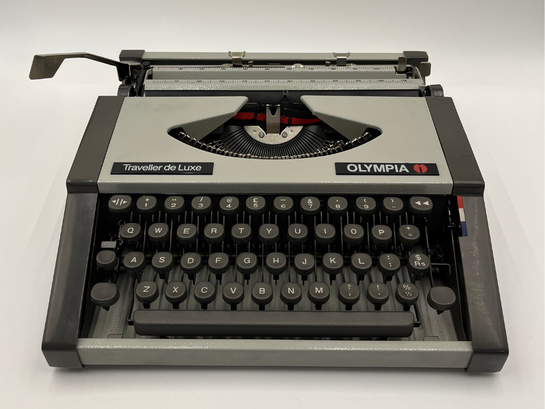
This exhibition features a portable Olympia-Werke typewriter from the 1970s.
Before computers became widespread, typewriters were trusted companions for expressing thoughts and emotions.


📬 If you could write a letter, who would it be for?
A long-overdue thank you, an unspoken longing, or a simple hello?

We invite you to transform your thoughts into letters and send them to someone who matters.


Let your words set off once more, continuing the legacy of letters.


Highlight Exhibits

Showcasing heartfelt letters, the exhibition allows the audience to transcend time and revisit the affections and Po Leung stories between the lines.
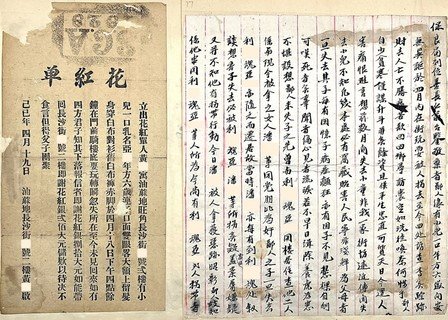
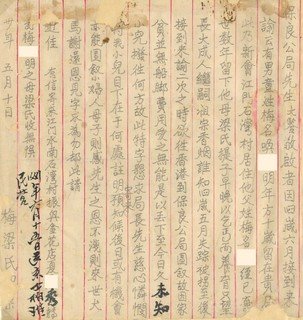
Appeal Letter from Mr. Wong, with Reward Slip(21 June 1929) 
  The letter reveals the severity of child trafficking at the time and the challenges involved in investigating such cases. In desperation, Mr. Wong, whose son had been kidnapped, not only offered a reward but also turned to the Kuk for assistance. With the average monthly living expenses for a typical Hong Kong family ranging from 17 to 20 dollars, the 200-dollar reward he offered was an extraordinary sum, far beyond what most could afford. The heartfelt words in the letter vividly convey the parents' deep anxiety and longing, making it profoundly moving.
Appeal Letter from Mrs. Mui(10 May 1941)
  Mrs. Mui's son was kidnapped and brought to the Kuk. The Kuk received her letter only a year later. In it, she explained that she was unable to come to Hong Kong to retrieve her son and pleaded simply to know his whereabouts, hoping for a future reunion. Her words are filled with sorrow and helplessness, revealing the deep pain of a mother forced to be separated from her child. Sadly, due to the outbreak of the Sino-Japanese War and the resulting surge in the Kuk’s population, by the time her letter arrived, her son had already been transferred to the King's Park Refugee Camp.
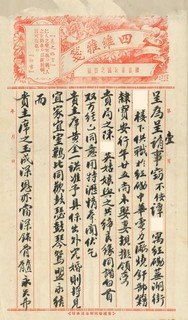
Letter Requesting Marriage Arrangement Service(18 September 1939)
  Letter paper is considered one of the "Four Treasures of the Study," and its design reflects the refined aesthetic of traditional literati culture. This particular paper features the phrase “Four Virtues” — propriety, righteousness, integrity, and a sense of shame — with a special annotation on “righteousness.” This suggests that the letterhead served not only as a medium for correspondence but also as a tool for moral education.
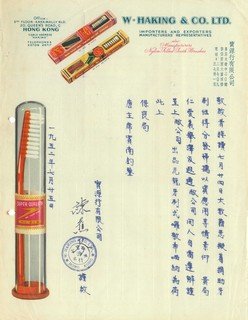
Letter from W. Haking & Co. Ltd.(25 July 1952)
  Ms. Pauline Chan Chiu-kam, who signed the letter, was one of Hong Kong’s few outstanding female entrepreneurs. In 1949, she co-founded a company with Mr. Wong Ha-king to produce nylon toothbrushes, which later became one of the largest manufacturers of its kind in Asia. Mr. Wong also had ties to Po Leung Kuk, having served as a Director from 1933 to 1934.
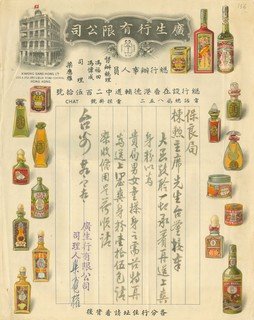
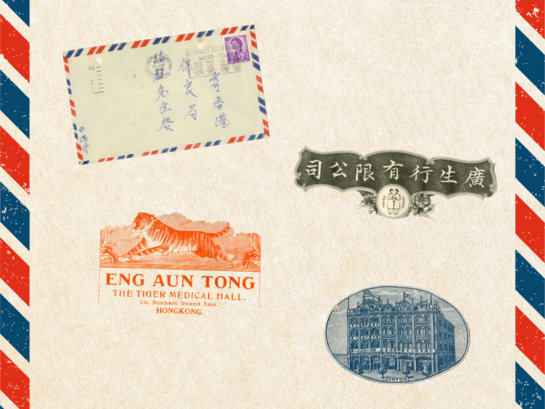
Letter from Kwong Sang Hong Ltd.(19 August 1940)
  Kwong Sang Hong Ltd. was founded by Mr. Fung Fook-tien in 1898 and became well known for its “Two Girls” brand. The letterhead reflects the brand’s signature use of printed promotional materials, featuring a variety of products, including talc-free powder donated to the Kuk, as well as popular items such as floral water, hair oil, and face cream.
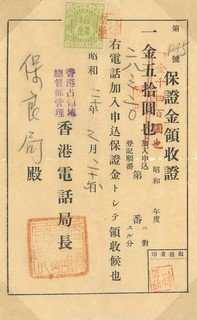
Deposit Receipt for Telephone Services(20 February 1945)
  During the Japanese occupation, residents were required to pay deposits to the military government for utilities such as telephone lines. This receipt shows a 10-cent revenue stamp.
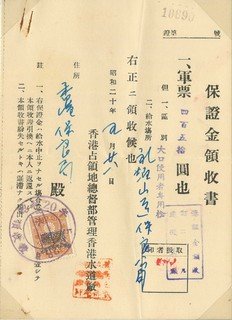
Deposit Receipt for Water Supplies(28 June 1945)
  During the Japanese occupation, residents were required to pay deposits to the military government for utilities such as water supplies. The receipts show a 5-cent revenue stamp.
我要捐款